(Crossposted from the American Constitution Society :: Columbia Law School)
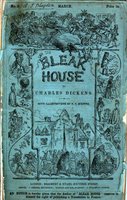 At the present moment (August, 1853) there is a suit before the court which was commenced nearly twenty years ago, in which from thirty to forty counsel have been known to appear at one time, in which costs have been incurred to the amount of seventy thousand pounds, which is A FRIENDLY SUIT, and which is (I am assured) no nearer to its termination now than when it was begun.
Charles Dickens, Preface to Bleak House (1853)
The case had been frequently before this court in various aspects; first, in 13 Peters, 404, then in 15 Peters, 9, 2 Howard, 619, 6 Howard, 552, 15 Howard, 473. In some of these reports large extracts are made from the record, illustrating the points of law and fact then under consideration, and also the evidence in support of them. All of this past history was brought again to the notice of the court in the argument of the present case, which cannot be again recited in the present report. The reader who wishes to understand all the points which are discussed in the opinion of the court must turn back to the preceding volumes above cited, and follow the case through its successive developments. He will then be able to appreciate the concluding remark in the opinion of the court, which is as follows:
"When hereafter some distinguished American lawyer shall retire from his practice to write the history of his country's jurisprudence, this case will be registered by him as the most remarkable in the records of its courts."
Gaines v. Hennen, 65 U.S. 553 (U.S. 1861) (reporter's note) (emphasis added).1
As he was writing
Bleak House over the course of 1852 & 1853,
Charles Dickens was aware of numerous cases mired for decades in the Courts of Chancery. Although his case of
Jarndyce & Jarndyce was fiction, he knew the plodding reputation of the English courts at the time would make his case appear real to his 19
th Century British audience.
2What Dickens probably did not know at the time, was that on this side of the Atlantic a woman named Myra Clark Gaines had already been pursuing a claim to an estate for almost twenty years.
What Dickens could not have known at the time was that the Gaines Case would continue for almost
forty more years, becoming the longest case in the history of the U.S. judiciary. Her case, originally filed in 1834 would not be fully resolved until 1892, almost sixty years later.
Beginning with her first lawsuit in 1834 and culminating with
New Orleans v. Whitney in 1891,
3 the Supreme Court of the United States heard issues concerning the Gaines case an astounding
sixteen times,
4 and the Louisiana Supreme Court heard the case
eight times.
5What was at issue in the Myra Clark Gaines Case?
For the answer, we turn to Elizabeth Urban Alexander's
Notorious Woman: The Celebrated Case Of Myra Clark Gaines, a 300-page biography of Ms. Gaines published in 2001:
 The events that formed the basis for the Gaines case began in 1787 when Daniel Clark arrived in New Orleans to join his uncle, Colonel Daniel Clark, in business. Ten years later, Colonel Clark conveyed all of his extensive property in Louisiana to his nephew, and at the age of thirty, Daniel Clark found himself one of the richest men in North America.
Clark's many business ventures brought him large revenues that he invested primarily in New Orleans real estate. During the early years of the nineteenth century, as he established himself in New Orleans as "a man of much personal pride and social ambition," Clark became romantically involved with a young Frenchwoman. All accounts of Zuileme Carrière emphasized her extraordinary beauty, vivacity, and charm, and both sides of the lawsuit admitted Clark's fascination with her.
Myra, daughter of Clark and Carrière, later came to believe that her parents had contracted a legal, though secret, marriage, making her the true heir to Clark's fortune. As she grew up, however, she was raised by friends of Clark and kept in ignorance of her real parentage as well as of her father's death in 1813, when she was nine.
Nearly twenty years afterward, Myra and her young husband arrived in New Orleans with a tale of a lost will and a claim that she was the true heir. Few believed her story. For the rest of her life, as a young wife and mother, as the third wife of a prominent general, and as a widow, Myra Clark Gaines pursued the vindication of her "rights."6
Besides its longevity, the Gaines case is legally interesting for a number of reasons. First and foremost, the Gaines case is a case about antebellum federal power — particularly about the scope of federal power in a state jurisdiction governed by civil law. Moreover, the case concerns the use of federal equity jurisdiction to govern a matter of domestic relations, an area where today's federal courts are loathe to exert their influence.
7Many of the appeals in the case reflect the reticence of courts sitting in Louisiana — even federal courts — to apply federal equity jurisprudence.
8 The parties opposing Ms. Gaines (protecting the estate of her father) frequently argued before the court that equity had no place in Louisiana. In
Gaines v. Chew, one of their many SCOTUS appeals, the estate administrators maintained that federal equity jurisprudence constituted "foreign law" inapplicable in the equity-free zone of Louisiana.
9In 1885, Ms. Gaines died, 6 years before the case came to its ultimate conclusion in her favor. After winning the final case before the U.S. Supreme Court the year before, on July 26, 1892, the administrator of her estate received a check for $923,788 from the city of New Orleans (which had received the Clark estate), ending the litigation.
10 As you'd expect, creditors had significant claims against this sum, and little remained for the Gaines heirs to divide up.
If you want to know more about the Gaines case, I encourage you to check out Elizabeth Urban Alexander's
Notorious Woman: The Celebrated Case Of Myra Clark Gaines or (if you don't want to leave the friendly confines of
Westlaw or
Lexis) check out
Federalism's Fallacy: The Early Tradition of Federal Family Law and the Invention of State's Rights by Kristin L. Collins. 26 Cardozo L. Rev. 1761 (April 2005).
1 Justice James Moore Wayne – writer of the opinion cited by the above reporter's note – would die 6 years later in 1867, 24 years before the Myra Clark Gaines case would finally culminate in 1891.
2 Dickens not only succeeded in capturing the attention of a 19th Century British audience — he suceeded in capturing the attention of the modern U.S. judiciary. An unrestricted Westlaw search for "Jarndyce" among U.S. state and federal cases returns 254 results, including 3 SCOTUS references (most recently, Hartman v. Moore, -- U.S. ---, 126 S.Ct. 1695, 1701 (2006)
3 138 U.S. 595 (U.S. 1891)
4 U.S. Supreme Court Cases — Myra Clark Gaines
Ex Parte Whitney, 38 U.S. (13 Pet.) 404 (1837)
Gaines v. Relf, 40 U.S. (15 Pet.) 9 (1841)
Gaines v. Chew, 43 U.S. (2 How.) 619 (1844)
Patterson v. Gaines, 47 U.S. (6 How.) 550 (1848)
Gaines v. Relf, 53 U.S. (12 How.) 472 (1852)
Gaines v. Hennan, 65 U.S. (24 How.) 553 (1861)
Gaines v. New Orleans, 73 U.S. (6 Wall.) 642 (1868)
Gaines v. De La Croix, 73 U.S. (6 Wall.) 719 (1868)
Gaines v. Fuentes, 92 U.S. 10 (1876)
Smith, et al. v. Gaines, 93 U.S. 341 (1876)
Davis v. Gaines, 104 U.S. 386 (1881)
New Orleans v. Christmas, et al., 131 U.S. 191 (1889)
New Orleans v. U.S. ex rel. Christmas et. al., 131 U.S. 220 (1889)
New Orleans v. Whitney, 138 U.S. 595 (1891)
The district & circuit court cases involving Myra Clark Gaines are far too numerous to detail here, but information regarding them is available in the Bibliography of Elizabeth Urban Alexander's Notorious Woman: The Celebrated Case Of Myra Clark Gaines, the text of which is searchable at Amazon.com.
5 Louisiana Supreme Court Cases — Myra Clark Gaines
Barnes v. Gaines, 5 Rob. 314 (1843)
Succession of Clark, 11 La. Ann. 124 (1856)
Clark's Heirs v. Gaines, 13 La. Ann. 138 (1858)
De la Croix v. Gaines, 13 La. Ann. 177 (1858)
Van Wych v. Gaines, 13 La. Ann. 235 (1858)
Fuentes v. Gaines, 25 La. Ann. 85 (1873)
Foulhouze v. Gaines, 26 La. Ann. 84 (1874)
6 Elizabeth Urban Alexander, Notorious Woman: The Celebrated Case of Myra Clark Gaines 3 (2001)
If you're at Columbia Law School, the Arthur Diamond Law Libary has a copy of Notorious Woman available for checkout. Its call number is KF759.C57 A43 2001.
7 For a detailed analysis of the use of federal equity power in the Myra Clarke Gaines case, check out Federalism's Fallacy: The Early Tradition of Federal Family Law and the Invention of State's Rights by Kristin L. Collins. 26 Cardozo L. Rev. 1761 (April 2005)
8 Two of the Supreme Court appeals — Ex Parte Whitney, 38 U.S. (13 Pet.) 404 (1839) & Gaines v. Relf, 40 U.S. (15 Pet.) 9 (1841) — reversed lower federal courts sitting in Louisiana when those courts refused to apply equity to cases that they believed should have arisen under civil law, where equity was unavailable.
9 43 U.S. at 650 ("Complaint is made that the federal government has imposed a foreign law upon Louisiana. There is no ground for this complaint.").
10 The Gaines Case Settled; Some of the Claims to be at Once Paid by the Administrator, New York Times, July 27, 1892, at 1.


